

The Jungle of German Idioms: Why They Sound Crazy to International People
German idioms are a fascinating part of our language and often reveal the humor, creativity, and history behind everyday communication. While native speakers understand them instantly, many of these expressions sound completely crazy when translated word for word into English. Imagine hearing someone say that everything is “in butter,” that they “only understand train station,” or that they would “eat a broom” if something happened. For international learners, these phrases can be confusing, funny, and sometimes downright absurd. Yet they make the German language colorful, memorable, and uniquely expressive.
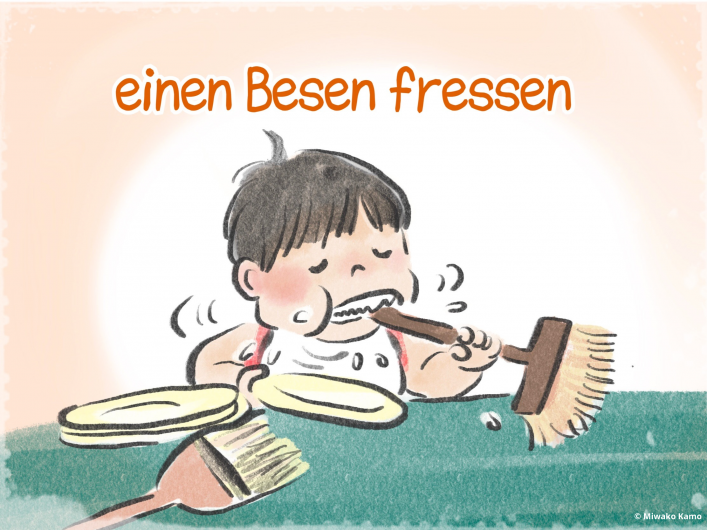
Many German idioms also deal with truth, trust, and skepticism. “Lügen haben kurze Beine” (“Lies have short legs”) means that lies will eventually be discovered. If someone tells a ridiculous story, they might be trying to “jemandem einen Bären aufbinden” (“tie a bear onto someone”), meaning to trick them or make them believe something untrue. When Germans find something hard to believe, they may say “Da fresse ich einen Besen” (“I’ll eat a broom”), meaning they do not think something will happen. “Das geht auf keine Kuhhaut” (“That doesn’t fit on any cowhide”) is used when something is outrageous or unbelievable. If something seems suspicious or strange, Germans say “Das kommt mir spanisch vor” (“That seems Spanish to me”).
German also has many expressions related to communication. “Ich verstehe nur Bahnhof” (“I only understand train station”) means that someone does not understand anything that is being said. When criticism or a sensitive message is expressed indirectly, Germans say “Etwas durch die Blume sagen” (“To say something through the flower”).
Other idioms describe how people see situations. “Ich sehe den Wald vor lauter Bäumen nicht” (“I can’t see the forest because of all the trees”) means that someone is so focused on details that they miss the bigger picture. Another common expression is “Aus einer Mücke einen Elefanten machen” (“To make an elephant out of a mosquito”), which means to exaggerate a small problem and make it seem much bigger than it really is.
Food appears surprisingly often in German idioms. One example is “Alles in Butter” (“Everything is in butter”), which means that everything is fine and there are no problems. Similarly, “Das ist mir Wurst” (“It’s sausage to me”) means “I don’t care,” while “Das ist totaler Käse” (“That’s complete cheese”) is used when something is nonsense or not true. If a situation goes wrong and causes problems, Germans might say “Jetzt haben wir den Salat” (“Now we have the salad”), which means “Now we’re in trouble” or “What a mess!”
Finally, some German idioms describe behavior and social interactions. “Blaumachen” (“To make blue”) means skipping work or school without a good reason. “Eine Hand wäscht die andere” (“One hand washes the other”) describes situations in which people help each other and both benefit from the exchange.
These idioms show that language is often more about culture and imagination than logic. Although they may sound bizarre to international speakers at first, they offer a fun insight into German culture and make learning the language much more entertaining