
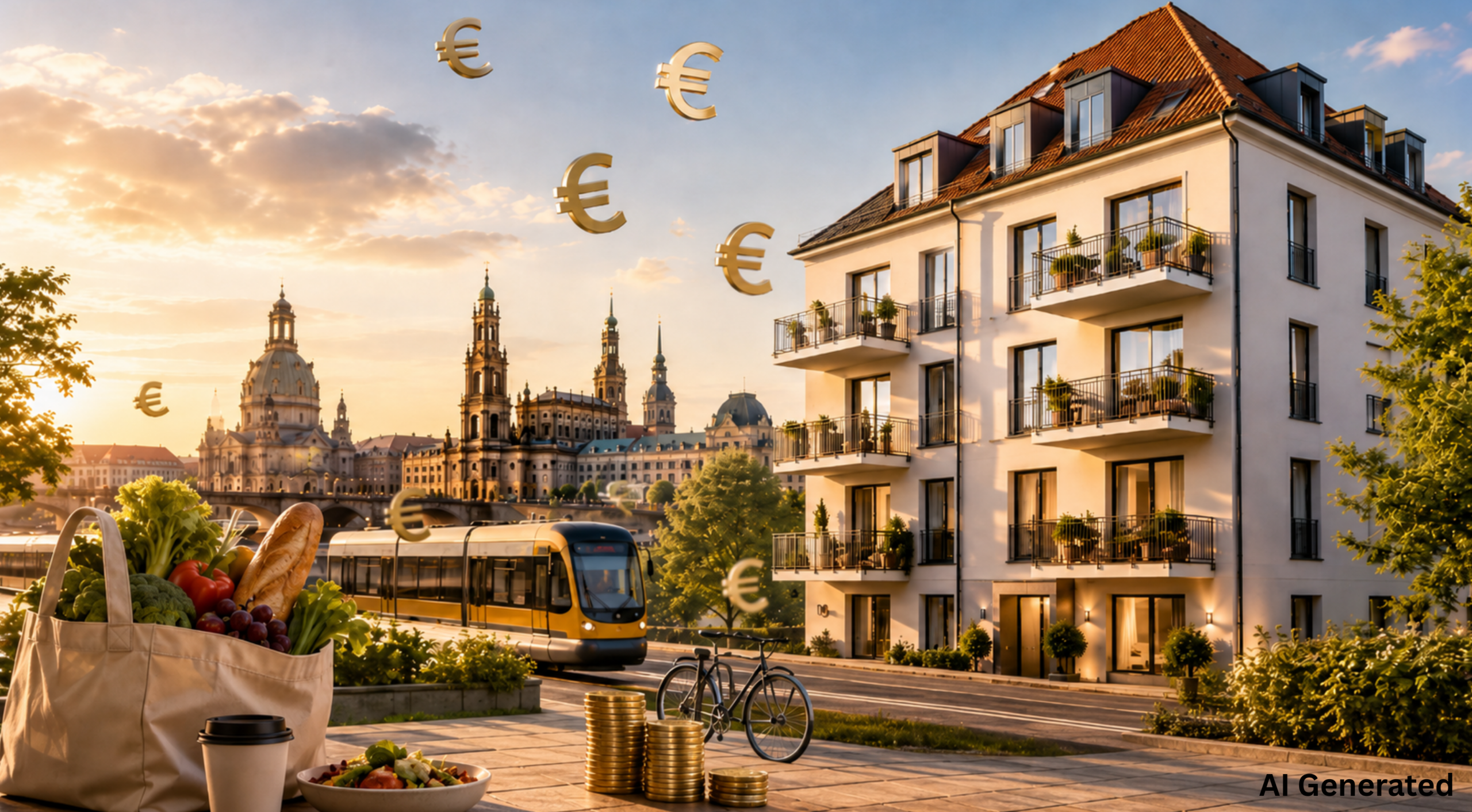
What does it actually cost to live in Dresden?
Dresden sits at the heart of Europe’s semiconductor and high-tech corridor, “Silicon Saxony.” More and more international engineers and technical specialists are choosing this city for their next career move. But for anyone about to sign an offer, the real question is a practical one: is the cost of living here actually worth it?
Where Does Dresden Actually Stand?
If you’re mentally benchmarking Dresden against a Munich or Frankfurt salary, that benchmark needs resetting. You don’t need a Western German big-city budget to live just as well here, often better. Munich is running about 35% more expensive for the same lifestyle, Berliabout 22%. That’s the whole point of the budget table you will find below: turning “worth it” into an actual number instead of a slogan.
Housing: Two Strategies, Pick Your Trade-off
German rentals split into cold rent (rent alone) and warm rent (rent plus basic utilities and property management fees). Always confirm which one you’re being quoted; the gap can run 100-200 €/month.
You’re generally choosing between two directions:
Strategy A: City-Center Living. Neustadt, Altstadt. Dense with amenities, restaurants, and culture, a good fit if you care about what your evenings and weekends look like, especially if you’re single or a couple without kids. A 50-60 m² one-bedroom here runs around 800 €/month warm rent.
Strategy B: Close to the Tech Corridor. Klotzsche, Pieschen, near the northern tech park cluster. Commutes can drop under 15 minutes, at the cost of quieter surroundings and less going on nearby. Better fit if you’d rather bank the commute time and spend it on work or family instead.
If you’re relocating with family, a 2-3 bedroom apartment (75–90 m²) runs at 1,100-1,400 € /month warm rent. Same trade-off applies.
One thing worth knowing upfront: standard German long-term leases are typically unfurnished, sometimes with only a kitchen included. So the prices are influenced by several factors as furnished vs. unfurnished, existing apartments vs. newly built apartments, location.
Food & Daily Groceries
Supermarkets here split into three tiers:
- Mid-to-premium: Rewe, Edeka, Konsum
- Discount: Lidl, Aldi, Netto
- International: Go Asia, Mix Markt, Zülfikar
Eating out: 10-15 € for a business lunch, 20-40 € per person for a proper restaurant dinner with a drink. Compared to Berlin or Munich, dining out in Dresden typically runs 15-20% cheaper.
Getting Around: One Ticket Covers the City
The Deutschlandticket (€63/month) is the best value here: it means unlimited rides on local public trams, buses, and regional trains (RE/RB). You can actually use it within Germany for public transports. However carefully read the exceptions before purchasing it. A lot of employers subsidize it fully or partially, so it’s worth asking about when you’re negotiating the offer.
mobiBike or nextbike covers short in-city trips 24/7, while mobiCar or teilAuto car-sharing beats owning a car for weekend runs to Saxon Switzerland or hauling something too big for a bike.
Insurance: Two Costs That Actually Hit Your Monthly Budget
Health insurance is mandatory here. Most employees end up on statutory health insurance (GKV) with premiums scaled to income and taken straight off your net pay. This varies person to person, so confirm your bracket with HR or a tax advisor while negotiating. There is also the option of private health insurances (PKV) so before making your decision carefully consider which option suits best to your personal situation.
The other one, easy to overlook and barely worth budgeting for: personal liability insurance, 4-6€/month for singles, 5-8€/month for families. Covers accidental damage to your rental or lost keys. It’s close to standard practice for renters in Germany, so set it up in your first weeks.
Sample Monthly Budgets: Two Living Profiles
The numbers below assume “Strategy A: City-Center Living” and reflect a realistic monthly spending structure:
| Expense Category | Single (1BR, ~50m²) | Family (2–3BR, ~80m²) |
| Warm rent (Warmmiete) | 750-900 € | 1,200-1,500 € |
| Electricity + internet + broadcasting fee | 100-140 € | 140-180 € |
| Groceries & daily necessities | 250-350 € | 550-700 € |
| Dining out, coffee, weekend socializing | 200-300 € | 300-500 € |
| Transport (Deutschlandticket) | 63 € | 180 € |
| Leisure, gym, cultural activities | 150-250 € | 250-400 € |
| Personal liability & home contents insurance | 4-6 € | 5-8 € |
| Estimated total monthly cost of living | 1,500-2,000 € | 2,500-3,500€ |
These are city-center estimates. Go the commuter route near the tech corridor instead, and housing typically comes in lower while everything else stays about the same. Actual numbers will shift with your lifestyle and household size; treat this table as a planning reference, not a precise figure.
Next Step: Contact intap
You’ve got the cost numbers now. But relocation involves a lot more than this: how to read a rental contract, where the EU Blue Card process tends to get stuck, how to find a school. If you’ve already got a Dresden offer and you’re deciding whether to sign, intap is here to help you run the numbers before you commit.
Get in touch with intap for a relocation guide built specifically for skilled professionals.